
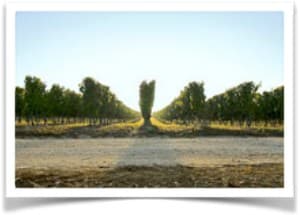
When people speak of terroir in Cahors, the terraces of the Lot are usually mentioned — those successive plateaus carved by the river, descending from the causses to the banks. But there is a less-known, more demanding, deeper terroir: the limestone causse, the high plateau that overlooks the valley and produces, in our view, the most mineral and most typed Cahors of the appellation.
A plateau born from the sea
The Quercy causses are former sea floors dating from the Jurassic (150–200 million years ago). Then, what is now southern France was covered by a warm sea populated with shellfish, whose limestone sediment built up over hundreds of metres. When the sea retreated and the Pyrenees rose, those sediments were lifted into plateaus, then eroded by water and time.
Today's result: dry limestone plateaus, pierced by chasms (Padirac), avens, springs — a typical karst landscape. It's on these plateaus our most singular vines grow.
Soil characteristics
On the causse, the profile is severe:
- Shallow depth: often 30–60 cm before bedrock.
- Excellent drainage: water never stagnates, it flows through karst.
- Very high stone load — rock outcrops everywhere.
- Low water reserve: vines regularly suffer summer hydric stress.
- Alkaline pH (6.5–8) tied to limestone dominance.
- Biological activity more discreet than on red clay, but present.
Tough conditions for the vine. Which is precisely what makes the grape's quality.
Why a "poor" soil produces great wine
A stressed vine is a vine that concentrates. When water and food are scarce, the plant limits vegetative growth and invests in its fruit. Result:
- Small berries (the vine can't grow huge bunches).
- Thick skins (more tannins, aromas, colour).
- Dense juice (concentrated sugar, preserved acidity).
- Progressive, late ripening (photosynthesis slowed by stress).
A terroir that demands patience from the winemaker. Causse harvests are often later than valley harvests. But it's also a terroir that rewards: long ageing, cellaring, maturation.
Our estate's dual profile
At Clos de Pougette, our 22 hectares split between two main profiles:
- Stony limestone soils on the plateaus: tense, mineral, deep wines, with that characteristic menthol return on the finish. Our best plots, selected for Hauts de Pougette, are on this profile.
- Red clay soils, deeper, on slopes: fleshier, rounder, fruit-driven wines that bring matter and generosity to our blends. Our Tradition cuvée draws largely from these plots.
The alternation in our blends gives Cahors with both causse structure and red-clay flesh.
The Douelle terraces (since 2021)
Since 2021, we have expanded with 5 hectares on the first and second terraces of the Lot valley in Douelle. Radically different soils:
- Alluvial (deposited by the Lot over millennia).
- Sandier, better-draining, warmer at night thanks to rolled pebbles.
- A wine profile more immediate, more fruit-driven, more accessible.
These plots complete our palette: more immediately gourmand cuvées without giving up the rigour of the causse for cellaring wines.
The role of exposure
On the causse, south exposure is almost mandatory for Malbec, which needs lots of warmth to fully ripen. All our main plots face due south, at 200–280 m altitude, with an open view of the valley. Cooler exposures (north, east) don't ripen this late variety enough on limestone.
In short
The Lot causses are a rare, mineral, demanding terroir — producing, when respected, Cahors of unequalled singularity. What makes their magic is exactly what makes them difficult: poor soil, scarce water, frank exposure, summer heat. The vine suffers there, and gives it back to us in the glass.
To taste this causse identity, start with our Hauts de Pougette 2021, the most causse-marked cuvée. To go further, our terroir page details the geology and practices.